







Search Results for: tax credit
Brazil Adjusts PIS-Cofins Tax Credit Rules, Coffee and Other Agricultural Exports Under Pressure, Global Prices May Rise Further
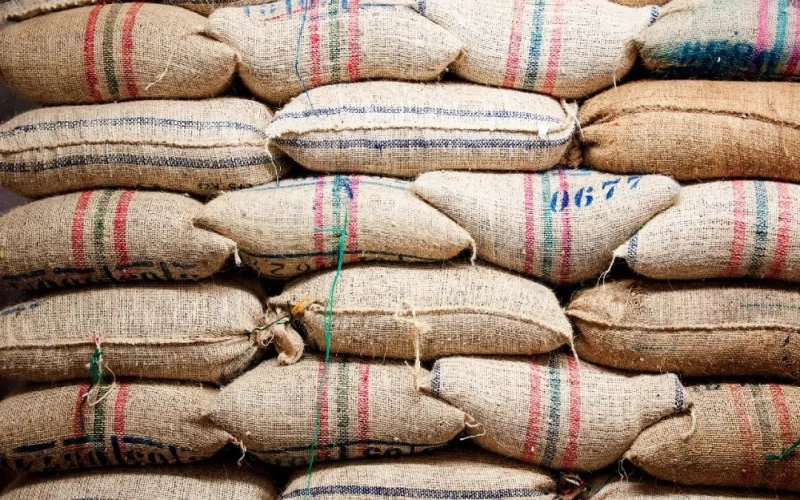
The Brazilian government recently submitted an executive order to Congress aimed at tightening the rules for the use of federal PIS-Cofins tax credits, with the goal of closing tax loopholes across multiple industries and supporting the objective of eliminating the fiscal deficit this year. However, this move has met strong opposition from the agricultural sector, with exporters of coffee, meat, fruit, grains and other products expected to see revenues fall by 26.3 billion reais. The Brazilian Coffee Exporters Council pointed out that the new rules will increase corporate cash flow pressure and operating costs, potentially triggering food inflation and unemployment, and weakening the international competitiveness of Brazilian coffee. Meanwhile, severe weather in Vietnam has led to reduced production and already pushed up coffee futures prices, and a slowdown in Brazilian exports could further fuel the rally. Notably, Luckin Coffee has signed a memorandum of cooperation with the Brazilian side, planning to purchase about 120,000 tons of coffee beans over the next two years, which brings good news for Brazilian exports. Front Street Coffee reminds enthusiasts to pay attention to the impact of policy changes on the coffee market. [more…]
New tax policies in Brazil! Prices of agricultural products such as coffee will continue to rise.
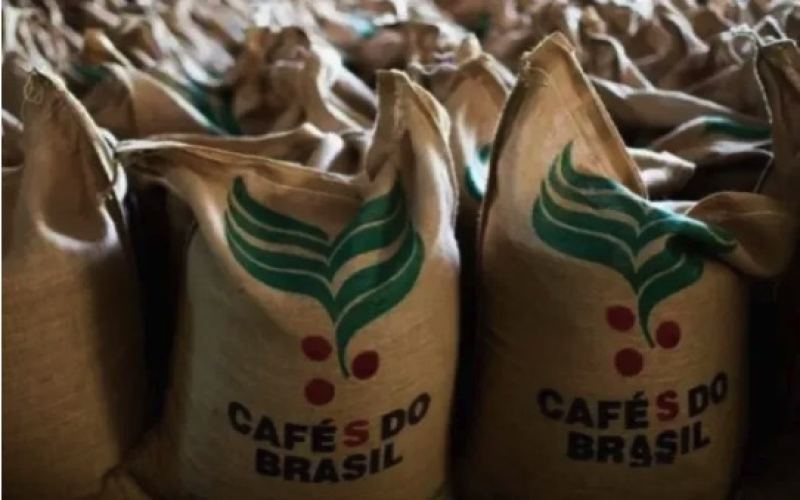
Recently, according to local media reports in Brazil, earlier this week, the new administrative order submitted by the Brazilian government to the congress contains a new measure related to tightening tax exemptions. According to the Brazilian Minist [more…]
Brazilian Coffee Exports Hit New High Again, Tax Policy Adjustments May Become a Future Concern
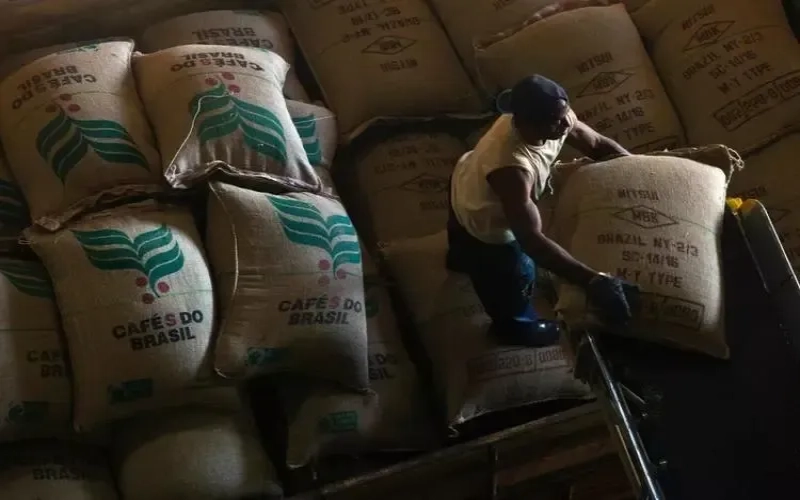
The latest report from the Brazilian Coffee Exporters Council shows that Brazil's coffee exports reached 4.397 million bags in May, setting a new record for the month, with a year-on-year increase of nearly 80%, and foreign exchange earnings also hitting a historic high. Cumulative exports in the first 11 months of the 2023/24 harvest year have approached a historic peak, and this year is expected to break the cycle record. The surge in robusta coffee exports has become a highlight, but the La Niña phenomenon in the second half of the year may bring the threat of drought, and coupled with the Brazilian government's new rules tightening tax credits, this may put pressure on the cash flow and global competitiveness of exporting companies. [more…]
Luckin Accelerates North American Expansion? New Jersey Job Listing Reveals New Moves Toward Opening Stores in the US
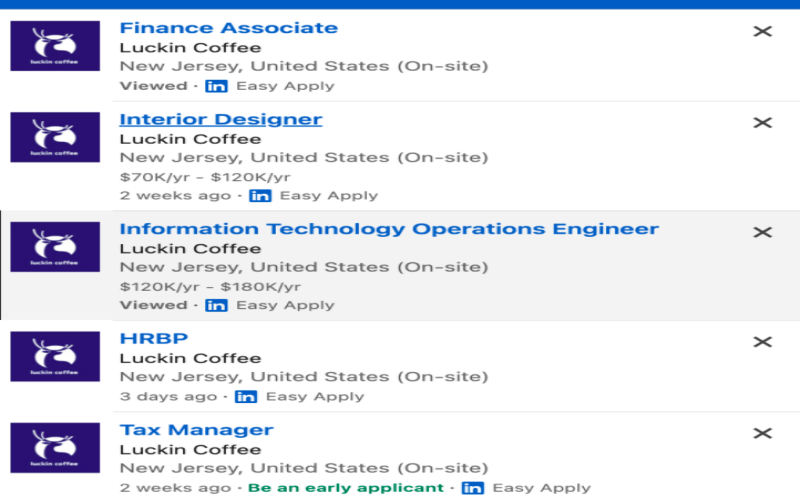
The news of Luckin Coffee opening stores in the United States has once again attracted attention. Recently, a WeChat public account post claimed that Luckin is advancing the site selection for U.S. stores, has begun contacting relevant service agencies, and is actively recruiting staff. LinkedIn information shows that within the past month, Luckin posted 5 job openings located in New Jersey, covering areas such as IT operations, finance, interior design, human resources, and tax, among which the tax manager position requires directly reporting to the CFO. Combined with previous reports by the Financial Times and statements by CFO Guo Jinyi, Luckin may explore the U.S. market with a prudent and flexible strategy, preferring East Coast cities such as New York. Whether this series of moves means that Luckin's overseas strategy will shift from Southeast Asia to North America is worth continued attention. [more…]
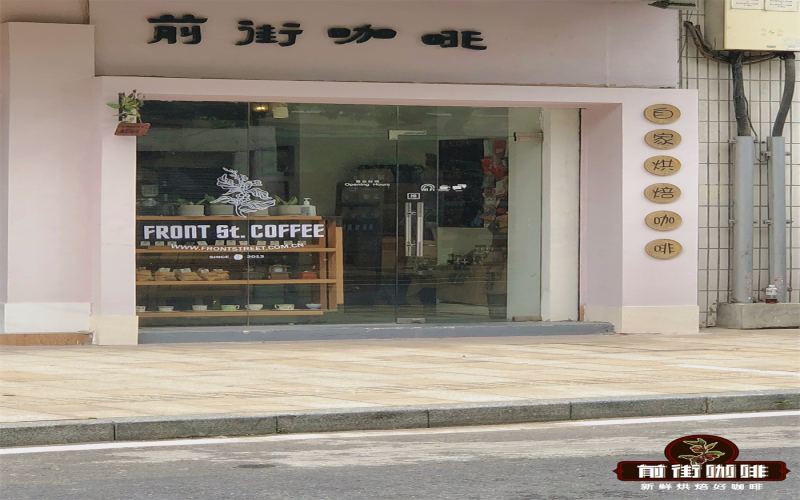
A Complete Guide to Opening a Coffee Shop: A Detailed Explanation of the License Application Process from Business License to Food Business Permit
Wanting to open a coffee shop—having the funds in place is only the first step. What really gives many entrepreneurs a headache is the complicated and cumbersome licensing procedures. From business registration and food business permits, to health, tax, and fire safety, and then to the special approvals for alcohol and roasted coffee, every single item determines whether the shop can operate legally. This article will systematically sort out the various certificates and application processes required to open a coffee shop, helping you clarify your thinking and avoid detours. At the same time, we will also discuss practical points such as site selection strategy, startup capital estimation, and equipment procurement. At the end of the article, Front Street Coffee's contact information is attached; you are welcome to exchange ideas on specialty coffee bean selection and shop-opening experience. [more…]

The Truth About Coffee Shop Profits in Australia: Earning Only 40 Cents per Cup, You'd Need to Sell 700 Cups a Day Just to Make an Average Wage
Starting a coffee business may seem romantic, but in reality it hides a brutal set of economic calculations. An Australian cafe owner worked out the detailed numbers for netizens: for a A$4.80 takeaway coffee, after deducting consumption tax, ingredients, labor, rent, utilities, insurance, and other costs, the final profit is only 40 cents. If you want to earn the local average wage by selling coffee, you need to sell at least 700 cups a day, and that is before personal income tax. Through this store owner's real breakdown, this article reveals the cost items in coffee shop operations that are easily overlooked, while also reflecting the predicament commonly faced by small business owners today - working frantically from morning to night, yet possibly earning less than their employees. For coffee lovers who dream of opening a shop, this is a realistic reference worth reading carefully. [more…]
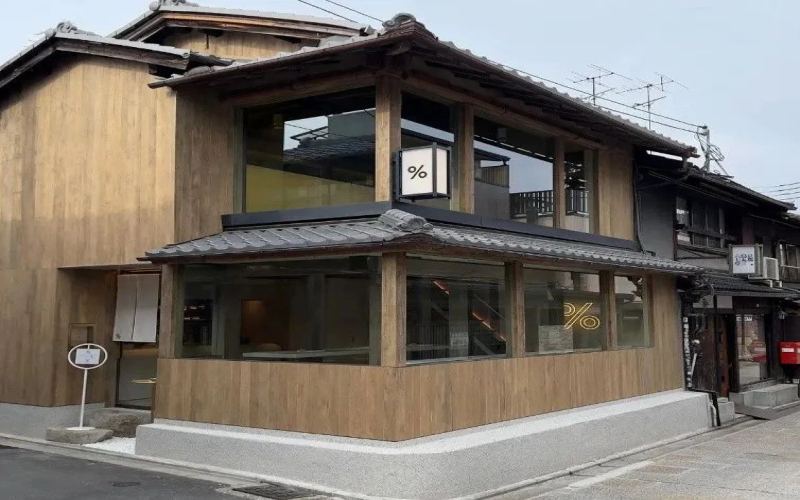
%Arabica crosses over into a Japanese-style diner: Kyoto launches a traditional ichiju-sansai breakfast, set menu priced at 4,800 yen
%Arabica, known for its minimalist design and small cups of coffee, recently opened the world's first traditional Japanese breakfast restaurant %Shokudō in Kyoto, Japan, officially entering the culinary field. This store is located directly opposite the %Arabica Kyoto Higashiyama store, combining traditional wooden architecture with a glass curtain wall, with only 12 seats, offering a "one soup, three dishes" Japanese breakfast by reservation, priced at 4,800 yen per set including tax, including miso soup, rice, grilled fish as the main dish, and three side dishes, with a choice of tea or %Arabica coffee after the meal. This move marks %Arabica's first attempt at a shokudo format among its 188 stores worldwide since returning to Kyoto in 2014, and also fulfills the brand's long-held dream of opening a restaurant. [more…]
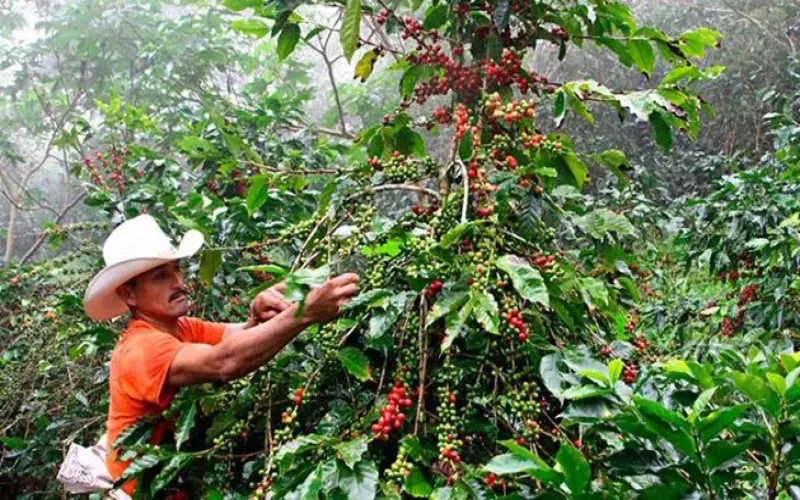
Honduras' coffee industry faces multiple challenges: the spread of leaf rust combined with drought may cause production to plummet by 24% in the 2023/24 season.
The latest report from the United States Department of Agriculture shows that Honduras, Central America's largest producer of washed Arabica coffee, is facing a severe test. In the 2023/24 fiscal year, the country's coffee production is expected to be only 5.5 million bags (60 kg per bag), a sharp drop of 24% from the previous year, while exports will also fall from 6.2 million bags to 5 million bags, a decline of 19%. Extreme heat and drought, a large-scale outbreak of coffee leaf rust, and a persistent labor shortage are the core factors behind the decline in production. At the same time, the Honduran government has introduced tax-exemption policies and is accelerating free trade negotiations with markets such as China in an attempt to ease the plight of coffee farmers. This article will combine the USDA report with data from the Honduran Coffee Institute to provide a comprehensive analysis of the ins and outs of this industry crisis. [more…]

Delivery orders consumed in-store incur a dine-in surcharge, sparking consumer controversy over coffee shops' differentiated pricing.
Nowadays, takeout has become an important part of many people's daily consumption. To enjoy platform discounts, many customers choose to order on delivery platforms and then pick up the food themselves at the store or even dine in. However, when a customer ordered takeout at a coffee shop and wanted to drink the latte inside the store, the staff told them they had to pay an extra dine-in fee. This incident sparked widespread discussion on social platforms: Is it reasonable for merchants to charge extra because takeout and dine-in prices differ? How should the consumer experience be safeguarded? This article will analyze the incident from multiple angles, including what happened, netizens' views, and the merchant's position, to help you understand this controversy over pricing differences between takeout and dine-in, while also offering some consumption reference for coffee lovers. [more…]
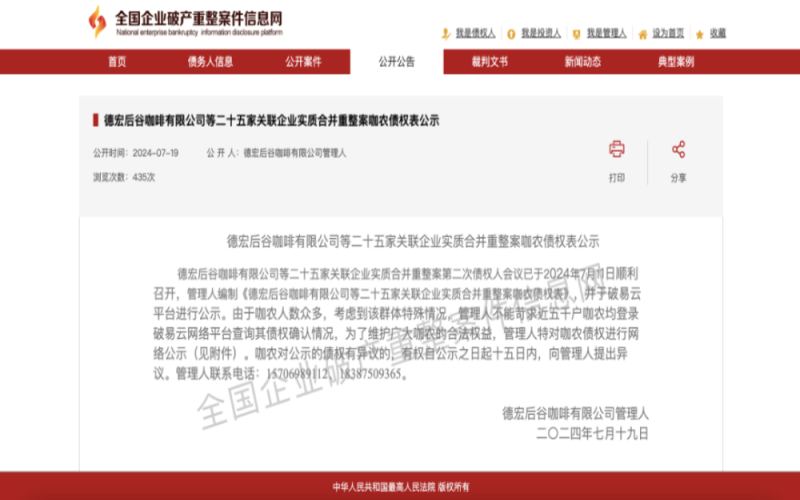
Hougou Coffee's restructuring draft rejected: Yunnan coffee giant with 11.5 billion yuan in debt reaches a fateful crossroads
The once Chinese domestic coffee giant Hogood Coffee now stands at a crossroads of life and death. The draft reorganization plan failed to pass due to opposition from the financial institution group and the secured creditor group, meaning this Yunnan coffee enterprise, which once managed over 200,000 mu of planting area and had annual revenue as high as 5.691 billion yuan, may permanently exit the stage of history. From supplying instant coffee raw materials to international brands such as Nestlé and Maxwell, to Chairman Xiong Xiangren being sentenced for the crime of unit bribery, Hogood's rise and fall epitomizes a dramatic chapter in Yunnan's coffee industry. This article will sort through the entire process of Hogood Coffee from its highlight to its predicament, presenting its debt crisis, reorganization vote, and the details of the criminal judgment behind it, for the reference of coffee enthusiasts and industry practitioners. [more…]

New Accounting Law Takes Aim at Financial Fraud: Luckin Coffee Named by the Ministry of Finance, Penalty Cap Leaps from 100,000 to Ten Times the Fine
Recently, the Ministry of Finance, in a new series of interpretive articles on the Accounting Law, named Luckin Coffee, Evergrande Real Estate, and other domestic and overseas listed companies for financial fraud, sparking widespread attention. The article pointed out that a major reason for the frequent occurrence of egregious financial fraud is that the cost of breaking the law is too low. Under the original Accounting Law, the maximum penalty for fraudulent enterprises was only 100,000 yuan, which was difficult to create an effective deterrent. In 2020, Luckin Coffee self-disclosed inflated transaction revenue of about 2.2 billion yuan, was delisted from Nasdaq, and reached a settlement with the U.S. SEC for a civil penalty of $180 million, and was also fined 61 million yuan in China. The new Accounting Law, effective July 1, 2024, significantly increases penalties, changing to "confiscate one and fine ten," with no upper limit on fines. This article reviews the entire course of Luckin's fraud, its consequences, and the key points of the new law, and discusses subsequent compensation mechanisms. [more…]
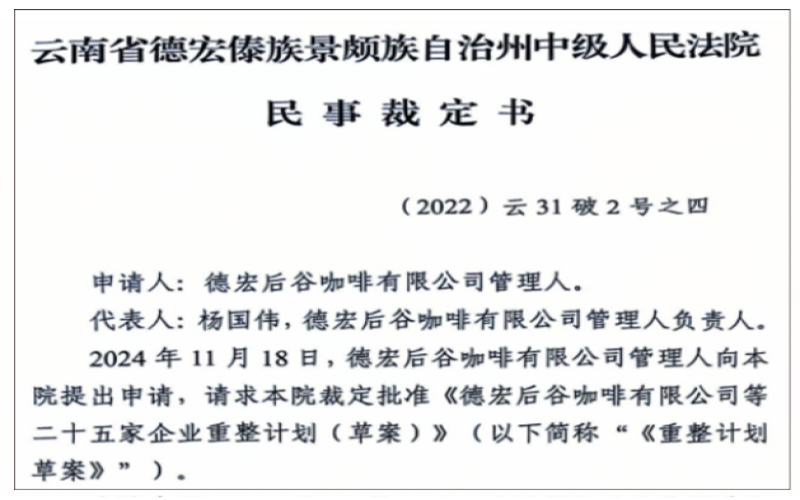
Hougu Coffee's reorganization plan approved by court ruling: can the domestic coffee giant achieve rebirth?
Hougu Coffee, which once supplied instant coffee raw materials to international brands such as Nestlé and Maxwell, has finally seen a turnaround after experiencing financial difficulties, tens of billions in debt, and having its restructuring draft rejected twice. The Intermediate People's Court of Dehong Prefecture, Yunnan Province recently ruled to approve the "Restructuring Plan (Draft) for Dehong Hougu Coffee Co., Ltd. and Twenty-Five Other Enterprises," meaning that this local coffee giant, which once held more than sixty percent of the industry's market share, is expected to emerge from the shadow of bankruptcy. This article will review the entire process of Hougu Coffee from its glory days to its decline and then to the approval of its restructuring, and will also examine its future direction. [more…]

Starbucks same-store sales rebound but net profit plunges, CEO's annual salary shrinks by 450 million, performance bonus falls through
Starbucks has released its first quarterly report for fiscal year 2026, showing a strong rebound in same-store sales, with global growth of 4%, and growth of 4% and 7% in the U.S. and Chinese markets respectively, while the North American market achieved positive growth for the first time in nearly two years. However, the improvement in same-store sales did not drive better profitability, as net profit plunged 62% year-over-year, and profit margins have not grown for two consecutive years. Meanwhile, Starbucks' stock price fell 7.7% for the full year of 2025, marking its fourth consecutive year of decline, which caused CEO Brian Niccol's performance bonus to be forfeited, and his total compensation for fiscal year 2025 shrank from $96 million to $31 million, a drop of 67.7%. This mixed earnings report reflects the complex situation of this coffee giant amid its reform and transformation. [more…]
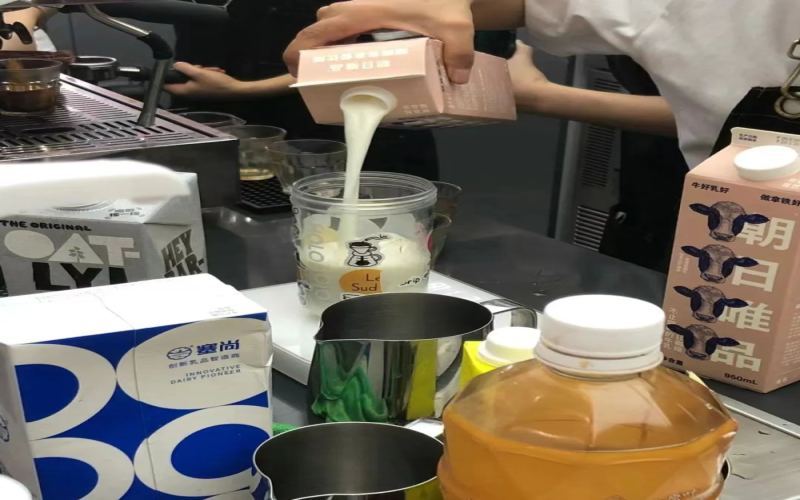
Asahi Weipin launches a transparent clear milk, taking clarified milk from handmade to mass production
In coffee drinks, milk has always been latte's soulmate, and its quality directly affects the taste performance of the final product. In recent years, the continued heating up of the coffee market has also brought a group of high-quality milk brands into the public eye, and Asahi Weipin is one of the most noteworthy. The brand recently launched a transparent milk that overturns traditional perceptions—Clear Milk, claiming to have a lighter taste than milk yet be smoother and richer than water. The arrival of this product means that clarified milk, which in the past required baristas to spend a great deal of time making by hand, can now be mass-produced, bringing new possibilities to the creation of specialty coffee. How exactly is this transparent milk achieved? How does its taste differ from ordinary milk? This article will explain it in detail for you. [more…]

Overpriced Coffee Gear Sparks Debate: Swap Keywords for Budget Alternatives, Front Street Coffee Teaches You How to Get Started Rationally
Want to make a good cup of coffee at home? Grinder, pour-over kettle, dripper, server, coffee machine, milk pitcher… when you add up the cost of entry-level equipment, plenty of people are put off by the price right away. Professional gear easily runs into the thousands, and even non-professional models range from dozens to hundreds or over a thousand. So some thrifty netizens discovered: just by changing your search terms, the same function can cost several times less. Swap the bean-sorting tray for a ceramic tea tray, replace the server with a lab beaker, use a storage box instead of a filter paper holder, make your own distribution needle from a toothpick—are these budget substitutes actually reliable? Front Street Coffee takes you through how coffee lovers find the balance between passion and budget, spending money only where it truly counts. [more…]
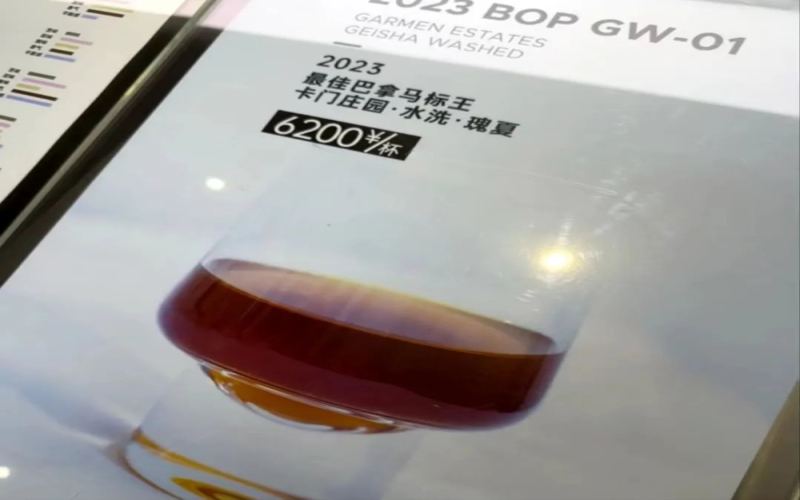
A Shanghai coffee shop launches a Geisha at 6,200 yuan per cup—what exactly is the cost of BOP champion beans?
Following the heated discussion sparked by a cup of coffee priced at 4,988 yuan, a coffee shop in Shanghai has once again reset perceptions of pricing by offering a cup for 6,200 yuan. The shop says the beans used are this year's Best of Panama (BOP) washed Geisha champion beans, with a score of 96.5, setting a new record for the washed category. From the green bean auction price, international shipping, tariffs, and roasting loss to store operating costs, how exactly does the value of this cup of coffee pile up layer by layer? Is high-priced coffee truly worth the money or just hype? This article will break down the cost logic and market phenomenon behind this sky-high-priced cup of coffee. [more…]

Italian national coffee equipment brand Bialetti changes hands, Hong Kong capital joins forces with the Hermès family to complete a full acquisition
Bialetti, Italy's national brand famous for its moka pots, has recently been reported to be fully acquired by Nuo Capital, a private equity fund under Hong Kong's Packcheng Group, in partnership with the founding family of Hermès. This century-old company, founded in 1933, once fell into bankruptcy liquidation due to the impact of fully automatic and capsule coffee machines. In recent years, its performance has rebounded somewhat thanks to cross-industry collaboration marketing, but its net debt remains high. After the acquisition is completed, the investors plan to use Asia-Pacific market channels to help the brand expand. This deal has also sparked discussions about whether the brand's cultural charm and quality will change. Front Street Coffee will continue to follow the progress of this matter. [more…]
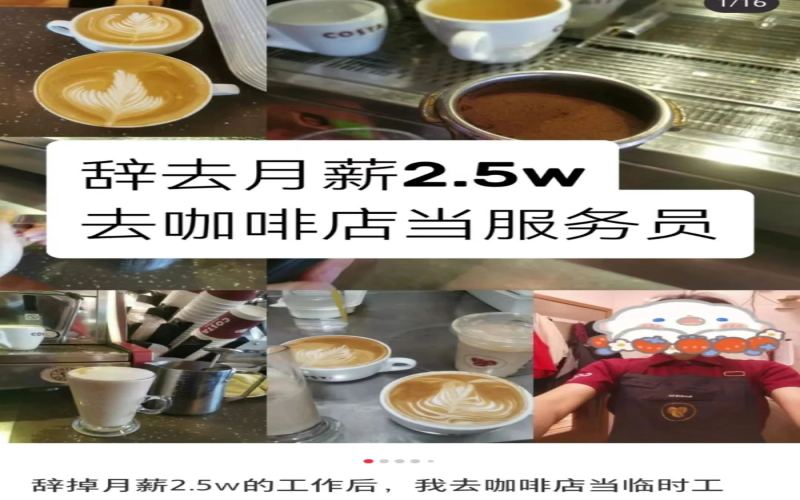
After leaving a job paying 25,000 yuan a month, I chose to work part-time at a café: A career experiment in labor and freedom
Why would someone voluntarily give up a job paying 25,000 yuan a month? Recently, a blogger shared her experience of resigning from a high-paying position to work part-time at a café, sparking widespread discussion. She admitted that her initial motivation came from a longing for the environment of a beverage shop—no after-work phone bombardments, no buck-passing or office politics, the ability to see the daylight, and the chance to observe all kinds of customers. Even more appealing was the freedom over her time: 23 yuan an hour, self-determined working hours, and only two half-days a week. Behind this "café temp worker" trend lies a deeper reflection among contemporary office workers on the trade-off between mental burnout and physical labor. [more…]
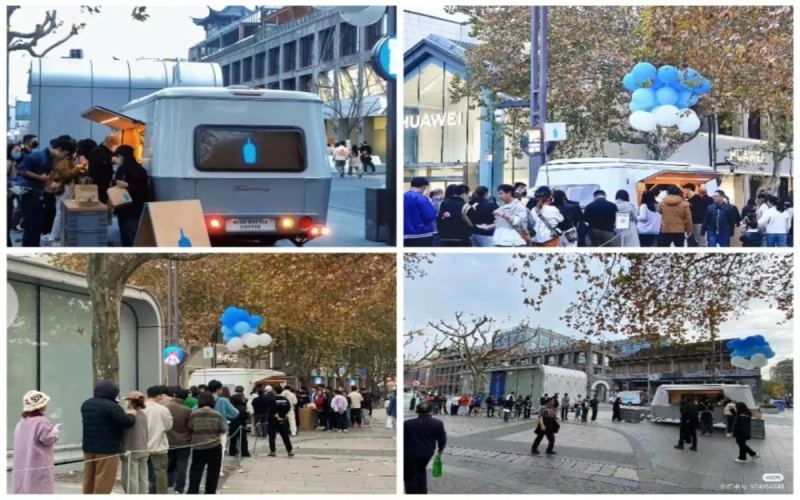
Blue Bottle Coffee Truck Residency by West Lake: One-Hour Lines on Day One, Sharp Drop in Crowds the Next Day—High-Priced Pop-Up Model Meets a Cool Reception
Specialty coffee brand Blue Bottle recently brought a grayish-white coffee truck bearing the brand's logo to the shores of West Lake in Hangzhou, planning to stay for three months. On the first official day of operation, consumers queued for about an hour in the cold wind to receive limited-edition small gifts and take photos with the retro coffee truck; however, just one day later, the bustling queue noticeably faded. The truck's limited menu is priced from 28 to 58 yuan, close to in-store prices, yet it cannot provide comfortable seating, prompting some consumers to question its value for money. Looking back at the controversy over its previous co-branded pop-up in Beijing, as well as the positive response to its Shenzhen pop-up store, Blue Bottle's Hangzhou pop-up model this time seems to face more scrutiny. Online speculation suggests this move may be to build hype for a future Hangzhou store, but the company has not yet disclosed any related plans. [more…]

Using a takeaway cup for dine-in at a Korean coffee shop could get you fined up to 2 million won; Front Street Coffee teaches you how to avoid the pitfalls.
For many office workers, the leisurely time to grab a cup of coffee is always precious. Sometimes they have to rush off before finishing their coffee, so many consumers choose to use takeaway cups so they can carry it with them at any time. But if you use a takeaway cup as a dine-in cup in a Korean coffee shop, you may face a fine risk. Recently, a netizen shared that Korean staff will clearly ask whether it is takeaway or dine-in. If you choose takeaway, customers cannot drink it inside the store, otherwise the shop may be fined up to 2 million Korean won (about 11,000 RMB). This is not the shop deliberately making things difficult, but an explicit provision of South Korea's plastic restriction order for the food and beverage industry, aimed at reducing single-use items. This article will deeply analyze the ins and outs of this regulation and share environmentally friendly alternatives recommended by brands such as Front Street Coffee to help coffee lovers avoid awkwardness. [more…]